Wally’s Waffles and Rats!

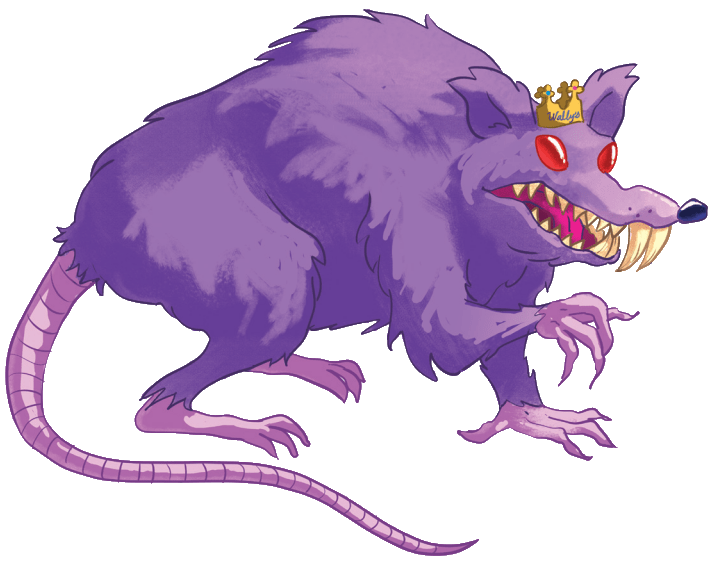
King Klik, a giant rat

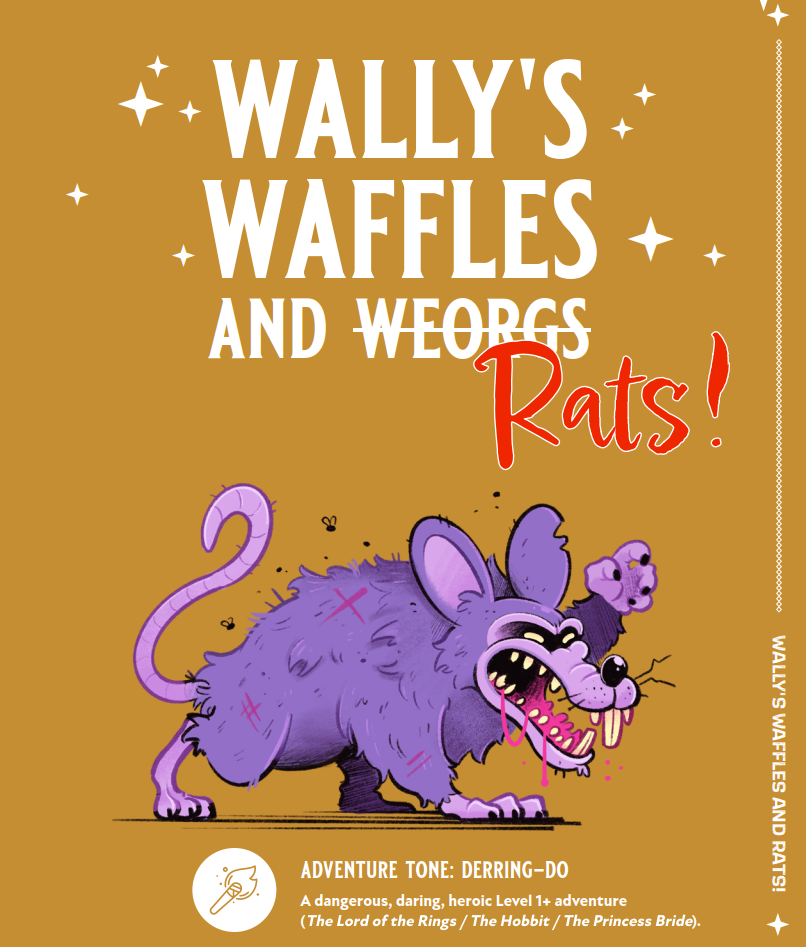
Last night my online group finished their second Land of Eem adventure: Wally’s Waffles and Rats!, from the Land of Eem: Adventures in the Mucklands anthology

Wally's Waffles and Rats! cover art by Ben Costa & James Parks

As it says on the tin, the Adventure Tone of this one is Derring-Do rather than hijinks, and I’d say it delivered. The party resorted to fighting a lot more in this one, though great excitement was had when the Dungeoneer character managed to use her Hire ability exactly as described in the example in the rules. The whole group seemed to derive great satisfaction from the rules playing out as in the example.

The players’ attitudes towards the setting seem to run the gamut from Enthusiastic to Wildly Enthusiastic. We’re still stumbling on the rules here and there, and there were one or two places in the map that I had a little trouble parsing: the cliff in area 4 could be more obvious, as could the connection between the hole in area 6 that I at first read as a underground pond and its outlet in 9, but on the whole it was smooth enough. I clipped the map from the pdf and used that as the map in Roll20, which worked find as long as I was a little careful to use fog-of-war to conceal the illustrations of the creatures on the map until the party properly met them.

The adventure is straight-up “There’s rats in the basement of the tavern”, but hey, it’s a classic. Particularly if you have new players they’re not likely to roll their eyes at the cliche, and there are twists on the tried-and-true formula that make the adventure more than just there are some big rats, go kill ’em. I was somewhat surprised that this time around the party spent very little time talking to the colorful NPCs hanging out at Wally’s. In the first adventure they did, the Curse of the Chicken-Foot Witch, they must have spent an hour or more just blabbing with them, but here they were straight to business… maybe they were feeling the time-pinch of the Subterranean Pits and Lairs LLC bulldozers ready to level the place at dawn.

Scouter the Underling

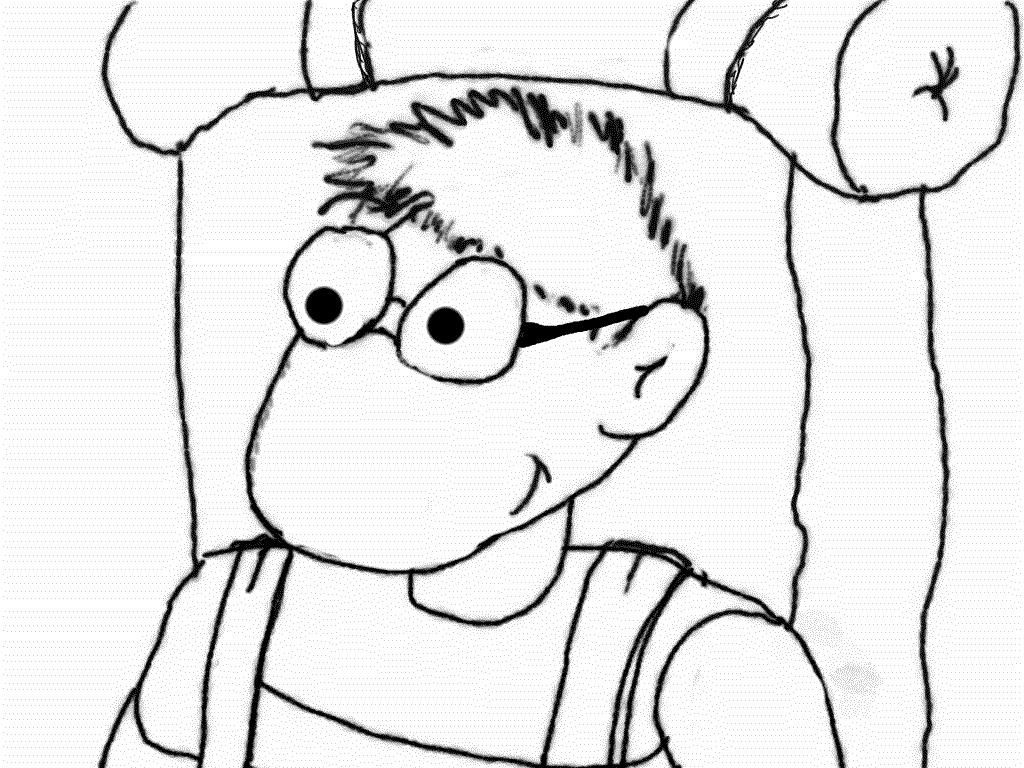
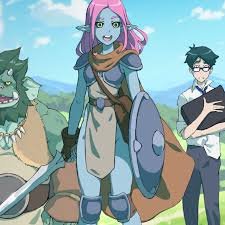
Scouter, provided by Uncle Al’s Discount Orphans as an Underling to the PC Brigitta the Bugbear, a Dungeoneer, in our new Land of Eem Campaign.

This is the first art I’ve drawn that’s more than a doodle in the margins of notes in… a decade? More? Posting it before I have time to make myself crazy trying to fix it…

Land of Eem: Expanding the Corporate-osphere

The Land of Eem’s corporate dystopia is a bit odd to me, in that it’s kind of capitalism without consumption. There are frequent mentions of corporate overlords, and many if not most of the NPCs in the adventures I’ve looked at so far have a bit in their description about their attitudes towards corporations and the corporate overlords… but there are relatively few corporations named and they’re clustered in the resource extraction and transportation industries: Subterranean Pits and Lairs LLC, Krog & Sons Inc., Mucklands Trading Co. Hasty Hippogruff Shipping Co., Oilmonger Plastic Factory. Factories dot the landscape and turn the sky of the Used T’Be Forest black… but don’t seem to be selling much of anything to anyone. To be fair, you can infer that the 400 products on the mundane items list ranging from fake poop to chemistry sets to gnomish tea sets are produced and sold somewhere, but I think we can expand on that a bit. So here are some companies to add to the list:

Employment

Uncle Al’s Discount Orphans“Why pay full price?” Providers torch-bearers and linkboys for your next dungeon expedition, as well as apprentices in bulk. This is where your Dungeoneer gets their underlings or crew.

Rugrats R Us“Ask about our bulk rates!” The more commodified corporate competition to Uncle Al’s, with outlets all over. Wannamuckers uses Uncle Al’s kids in their stockrooms – Grumbles uses Rugrats R Us. That’s why their prices are lower.

Alger & Alger – Success Guaranteed!* *guarantees not guaranteed The upscale alternative, suitable for raising the next generation of corporate overlords.

Department Stores

Needless Markups – Designer fashions at eye-popping prices: Hermies scarves, Grouch bags, La Kwa, it’s all here and it all costs an arm and a leg. Exhaust your coin purse on a 1-3 here, but narratively people recognize and are impressed (or outraged) by the brand.

Wannamuckers – the established “respectable” department store. Genteel, but not too genteel. Their holiday light show is a thing of legend, and families will travel from all over the Mucklands (or at least all over the Used T’Be Forest) to see it during the holiday season.

Mucky’s – mid-tier “value”-oriented. Their Thanksgrumbling Day Parade is a highlight of the season, featuring giant balloons of corporate mascots like Fizzy Wizard, Uncle Al, as well as fading stars willing to standing and pretend to sing while being carted down the street on floats. If the PCs manage to win over Chara the Chicken-Foot Witch in the introductory adventure, next Thanksgrumbling she probably ends up dancing on one of the floats.

Grumbles – Discount/budget items of dodgy provenance. Only exhaust a coin purse on a 1 here, but any success with a twist is probably the item breaking if not trouble with the law over it having been reported stolen.

“Does Mucky’s tell Grumbles?”

Supermarkets

Slop & ShopFrom Factory Farm to Table. Aisle after aisle of groceries, but somehow whatever aisle you’re trying to shop in, there’s a clerk unloading a pallet onto the shelves, blocking traffic.

Wholly FoodsFor the Whole You. Wholly sustainable, wholly organic, wholly overpriced. Kombucha section larger than the actual food section.

Oil

Bog Standard OilWe Care* About The Environment! (*care does does not imply actual caring, some exclusions apply, void where prohibited)

Brutish PetroleumFinders Keepers!

Insurance

KafCo – “You die, you win!”, and for their Health Insurance division: “We take the Care out of Health Care!” The premier insurance company for all of the Mucklands. Sorry, you need to fill out Form 22 to file a claim, but the only way to get a copy of Form 22 is to apply for one with Form 22.

Newspapers

The setting does have the Thurf Tribune, mentioned as the prime source of daily news in the Mucklands in the campaign setting book, and that the High Magistrate shut down the Bogtown Gazette, but I feel there’s room for more, particularly a yellow-journalism style “If It Bleeds, It Leads” style, as well as possibly a Village Voice-esque counter-culture journal

The MuckrakerAll The News That Fits In Print!

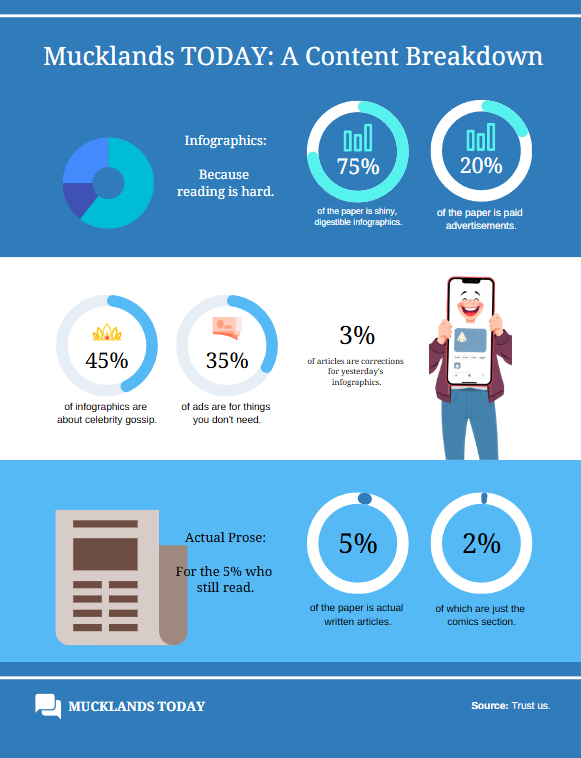
Mucklands TodayNews Barely Used!

Pilot PressWhat is Truth? Specializes in long-form think-pieces that provide little-to-no new information (“thumbsuckers”, in the parlance) “What the Rise of Corporate Power Says About Society”, or “The Meaning of the Dungeon Era”. Loudly decries the corporate ownership of papers like the Thurf Tribune, while hoovering up donations from non-profits established by wealthy “philanthropists” running those same corporations, e.g. the Krog Institute for Public Understanding and the Orfong Foundation for Journalistic Excellence.

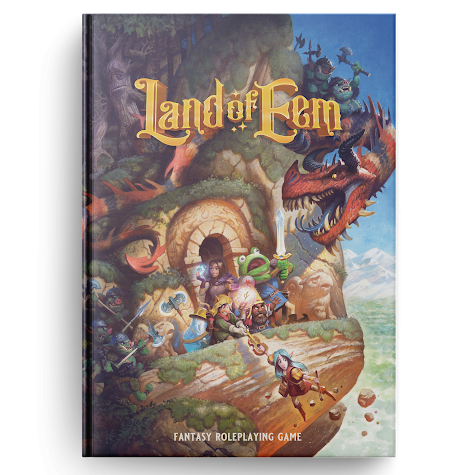
The Land of Eem

The Land of Eem

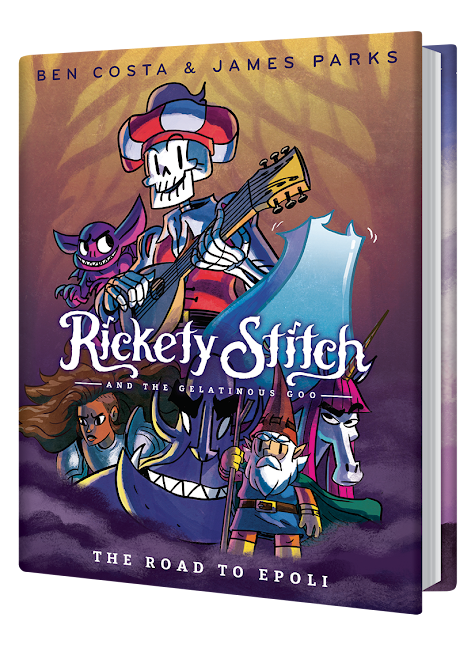
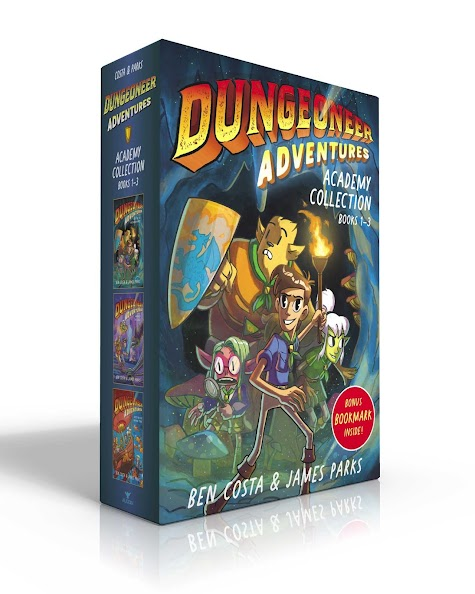
The elevator pitch is Muppets meet Lord of the Rings, with a dash of Mad Max dystopia thrown in. You had me at Muppets. I mean, it’s not actually a licensed Muppets game, but its tone and visuals are heavily Jim Henson inspired, and the visuals are a big part of it since it’s a setting that was created for a series of graphic novels (Rickety Stitch and the Gelatinous Goo) and some middle-grade stories (Dungeoneer Adventures)

Cover of 'Rickety Stitch and the Gelatinous Goo: The Road to Epoli', featuring a skeleton playing a guitar with colorful, whimsical characters in a fantasy setting.

You can get a Quick Start Guide at their website, and there are a bunch of actual plays and reviews on YouTube. The setting The Mucklands was a more-or-less vanilla fantasy setting many years ago, before the Gloom King defeated the heroes and plunged the land into, well, gloom. Now magic has faded and become increasingly rare, while the land has entered The Dungeon Age, a satirical industrial age: “A time chaotically run by rival corporations locked in a never-ending quest to out-do one another in business and expansion. All the while, average folk toil away in mines, factories, and dungeons, eking out a meager existence.”

We played on New Year’s Day, starting with a session zero at 1:00 PM and running until about dinner time, and then picking up at around 8:00 PM and running one of the published adventures “The Curse of the Chicken-Foot Witch” until about 11:00 PM. The players adored the setting, but the rules and character creation definitely took them some getting used to. And since it was my first-time GMing it, there was a lot of consulting the rules that probably will become second-nature once we’ve got some more sessions under our belts.

The game rules are something of a cross between Old School Renaissance play, e.g. explicit wilderness movement turns and procedures, heavily driven by random encounters, and something more like Powered by the Apocalypse with what amount to “play-books” for the various classes and a largely uniform resolution procedure that has you rolling 1d12 against a table:

RollResult
1-2Complete failure, and something bad
3-5Failure, but… a silver lining
6-8Success, but… a complication
9-11Success
12Complete Success, and something good

Shout out to Blaze Sanecki, who created the dynamic Roll 20 character sheet for Land of Eem, because that was a huge help in play. In particular, the macros for rolling that showed the quality of success were a real time-saver.

As you might imagine, this involves a lot of improv on the part of the GM and the players, and the game makes no bones about using the improv “Yes, and…” principle. Many of the characters abilities involve inventing details of the setting on the spot and making them canon, usually circumscribed by making it a once every session ability and possibly requiring a roll as well. Almost all the signature abilities are once every session, or once each combat, or something. Diegetic, these rules ain’t, and that’s probably our biggest sticking-point with them. Granted it was only the first session, but I had to frequently remind the players (and myself) that they had already used the ability that session so they’d have to spend a “Quest Point” to do it again… and then there’s the “Each Session” restriction, which differs from “Once Every Session” in that you can’t spend a Quest Point to use an Each Session ability again before the end of the session. Got that? I didn’t think so. There are definitely players that this sort of game is not suited to, either because they really want to think in character and meta-currencies like Quest Points are hard to wrap the character’s head around, or they don’t want to be put on the spot to invent details. I know from past experience with Dungeon Crawl Classics that certain of my players hate having to come up with what their “Mighty Deed of Arms” attempt is and basically ignore it, only going for extra damage every time. If they ever play Land of Eem, I expect they’ll either pick abilities that don’t have that improv component, or make some random table they can roll on so they don’t have to choose. I lean a little that way myself as a player, but I flatter myself that as a GM I’m comfortable, even good at, making up stuff like that on the fly. Land of Eem definitely scratches my make-it-up-as-you-go itch, so far without triggering my “this isn’t role-playing, this is pretending to be the writers room of a TV show” aversion.

Look forward to some future posts on our play, and some resources for the setting, like additional corporations and NPCs for the players to interact with. Maybe even some art, since I’m finding myself inspired by the cartoony style of the illustrations by Ben Costa (one of the co-creators) and the others. For now I’m all in on Land of Eem, and even have the deluxe boxed set on its way from Exalted Funeral. Kind of wish I knew that it immediately gives you the PDFs of everything when you order it, before I dropped a chunk of change at DriveThruRPG to get the PDFs so we could play, but that’s real capitalism, boys and girls: I earn money, I give money to other people who give me goods and services in exchange, making us both better off according to our own preferences.

More Thoughts on RuneQuest

I’m reconsidering part of the rule I proposed for special effects like impale in RuneQuest. The problem with any die showing a 0 is an impale as long as it’s a success is that it skews the chances of impaling at low skills quite a bit. With 20% skill, half your successful hits are impaling. Not what I’d really like to see.

Instead, I’m thinking of making it 0 or 5 showing on the 1’s die. This restores it to about 20% chance regardless of the skill. I think this works out to where rounding would happen with the original RQ: skill 15%, say, you have 3 chances out of 15 (05, 10, 15), while at 19 it’s still 3 but now out of 19, not becoming 4 out of 20 until you hit 20.

In some ways this is even easier to spot: multiples of 5 are special. Hard to imagine even my math phobic players objecting to that.

Simplifying Spell Resistance in RuneQuest 2e

As part two of “The Macy Conventions”, I want to look at Spell Resistance.

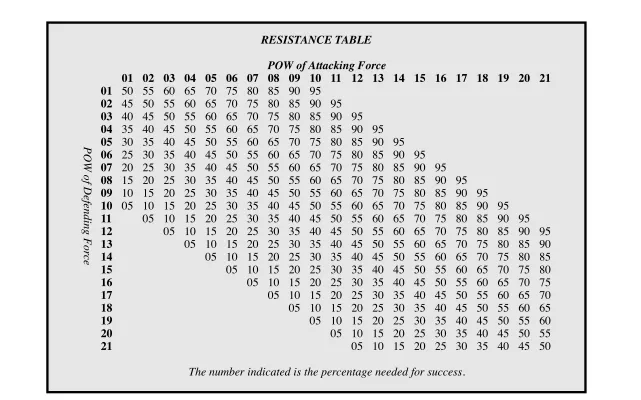
Spell resistance is another thing that’s needlessly complicated in RuneQuest 2e, or at least expressed in a needlessly complicated way. The rule is that to cast a spell on a resisting target, you need to roll 50%, plus 5% for every point your POW is higher than theirs, -5% for every point lower. 96-00 always fails. They even gave you a handy chart to cross index the POWs and see what you need to roll

Chart showing the percentile you would need to roll for each POW between 1 and 21 against POW 1 to 21.

That strikes me as an ugly way to achieve this result. My house rule is:

Spell Resistance

  1. Roll d20 and add (Your POW – 10)
  2. If result exceeds (not equals) target’s POW, spell succeeds
  3. If result is less than or equal to target’s POW, spell fails
  4. A 1 always fails.

That’s mathematically identical, but seems to me much easier at the table. Most people are very fast at subtracting 10 from a number, even when it results in a negative number, compared to subtracting arbitrary numbers between 1 and 21 and then adding 50.

POW Gain Rolls

If you qualify for a POW gain roll after an adventure (cast a spell that could fail other than the auto fail on a 1 in a stressful situation during an adventure), roll strictly higher than your current POW on a d20 and you can increase your POW according to the regular rule (10% chance of +3 POW, 30% chance of +2, otherwise +1).

This is mathematically equivalent to the original subtract POW from racial max, multiply by 5 and roll less than the result on %.

The Macy Conventions: A RuneQuest house rule

As is my wont, I’ve been noodling on some older games that have come up in conversation recently, and in particular RuneQuest 2e. I ran a RuneQuest campaign, back in the day, and I’m pretty sure we started with 1st edition, and later switched to 2e (or maybe I just did a different campaign of 2e… wouldn’t be the first time my memory of those long ago events was a little blurry). There were a lot of things I liked about RQ, and later the whole BRP line, particularly Call of Cthulhu, and its percentile dice system was one of the easiest things ever for players to grok. Your skill at driving was 32%, cool, roll under 32 on the percentile dice and you’re golden. Now, what exactly it meant to fail that roll when it was something as mundane as driving was a matter of interpretation and sometimes heated debate, but the basic principle couldn’t be simpler.

But I was never quite happy with the way things like criticals and fumbles were worked into the roll, or in RuneQuest things like impaling with your pointy weapon. The basic rule, with many variations on the exact numbers, was always something like compute 5% of your skill, if you roll that or less you’ve scored a critical hit. For instance if your skill was 100, then 01-05 was a crit; if your skill was 50, then only 01-02 (or maybe 03 depending on rounding). An impale would be similarly 01-20 with skill 100, while proportionally less the lower your skill. Fumbles were the reverse, though explained rather confusingly as starting at 5% (96-00) for skills less than or equal to 20 and being reduced by 1% for every full 20% in your skill (97-00 for skill 40, 98-00 for skill 60, etc.) This meant that unless you were great at mental arithmetic, you had to write down your critical, impale, and fumble range for each and every skill on your character sheet, updating it whenever the skill improved. And if you reached the point with skills at 100+ where you could split your skill into two actions with any division you liked as long as both were at least 50, recalculating with what you chose at the moment (or sticking to a split that you precalculated). Bleh, and double-bleh.

So, I’ve come up with a dice-rolling method for RuneQuest, BRP, and really any other percentile system that I really quite like. As far as I know this is original, though my memory being what it is and with all the time people have spent fiddling with things like this some pieces of it may have been published elsewhere and I’ve just forgotten running across it. As far as I can tell glancing through my Chaosium books, though, none of them have used this, sticking to variations on what I’ve laid out above. I think RoleMaster had a special convention for 66, maybe for all doubles, but I’m hazy on the details. Here it is, though, for your entertainment, with a tip of the hat to the famed Perrin Conventions that started the whole RuneQuest thing, the Macy Conventions:

The basic idea is to read the percentile roll cleverly, to simulate (more or less) the odds that calculating it the old way would have given you, and incidentally incorporating the 1d20 Hit Location roll into the same roll through more shenanigans in how you read off the result. Moreover, we want the whole thing be so simple and easy to remember that you wouldn’t have to keep looking it up once you understood it. Basically all doubles are special, either a crit or or fumble based on whether the roll qualifies as a hit or miss.

Special Results

  • Critical Hit: Any doubles (11, 22, etc.) that would normally hit
  • Fumble: Any doubles that would normally miss
  • Special Effect (Impale/Slash/Crush): Any roll that would normally hit with a 0 in either digit
  • Always Hit: 05 or less
  • Always Miss: 96 or higher

Hit Locations

Read the ones digit of your roll:

  • If tens digit is even: Use ones digit as location (0 = 10)
  • If tens digit is odd: Add 10 to ones digit

For reference the following is the hit location table from RQ 2. I haven’t really given much thought yet to whether there’s a way to simplify it to reduce the need to look it up, but the one look-up doesn’t strike me as that burdensome compared to the original. And of course if anybody finds the process of checking the tens digit this way a pain, they can just roll a separate d20. You probably should roll the separate d20 when you crit anyway, so crits don’t cluster in a couple locations. But for Ernalda’s sake, roll it at the same time as you roll your damage!

Humanoid Hit Location Table

D20AreaDescription
01-04Right LegRight leg from hip joint to foot
05-08Left LegLeft leg from hip joint to foot
09-11AbdomenHip joint to just under the floating ribs
12ChestFloating ribs to neck and shoulders
13-15Right ArmEntire right arm
16-18Left ArmEntire left arm
19-20HeadNeck and head

Example: if you hit with a 27, that’s location 7, so left leg; if you hit with a 37 that would be 17, so left arm.

Examples

  • You have a skill of 39.
    • You roll 33! It’s a crit, and strikes the right arm (13)!
    • You roll a 55! It’s a fumble, roll on the fumble table.
    • You roll a 19! It’s a hit.
    • You roll a 20! It’s a hit to the abdomen (10), and the attack impales/crushes/slashes depending on your weapon!
    • You roll an 07! It’s a hit to the left leg (7), and again the attack impales/crushes/slashes.
    • You roll a 70! It’s a miss.
  • You have a skill of 65.
    • You roll a 34, it’s a hit to the right arm (14)!
    • You roll a 44, it’s a critical hit to the right leg (4)!
    • You roll a 66, it’s a fumble!
    • You roll a 100, it’s a fumble!
    • You roll a 01, it’s an impaling/slashing/crushing hit to the right leg!

Stuck Weapons

Addendum: I had forgotten that a successful impale left the weapon stuck in the target unless you rolled again immediately looking for double the chance of an impale, i.e. if you had 4% chance of impale, you had 8% chance of freeing the weapon that same turn. On subsequent turns you just had to roll an ordinary hit. So:

Freeing stuck weapon: roll again, looking for a hit with either 0s or 1s on either die.

Later turns it’s still just looking for an ordinary successful hit. Automatically successful after 5 turns trying, just as in the original rules.

A Look at the Odds

So, how close is this method to the original? The answer is pretty close. Crits are about twice as common, but ranging from 0% if your skill is <11 to 9% if your skill is 99+. For instance if your have skill 25 you have 2 chances in 100 of scoring a crit (11 and 22 instead of just on an 01); if you have skill 99 you have 9 chances in 100 (11, 22, 33, 44, 55, 66, 77, 88, 99), while a 91 score it would be only 8. Fumbles are the same but in reverse, just being more common at lower skills and less common at higher ones. Double sounds like a lot, but twice a small number is still pretty small, and at least some later editions of RQ switched to 10% of the skill anyway, to make the calculation easier and the combat more spicy.

Chance of impalement (or crushing/slashing if you use that option) is a bit closer to the original. Once you get past 10% skill, you have 9 chances to impale (01-09) + 1 chance for every 10% more skill. So at 50% skill that would be 14% (01-09, 10, 20, 30, 40, 50) instead of the original 10%, while at 100% it would be 18% instead of 20%. My experience is that differences that small are very hard for the players to even perceive, though your mileage may vary, and it’s not like the original was arrived at by any rigorous examination of the odds in real combat.

The always hit/always miss odds are straight from the original, while the hit locations are nearly identical: there are exactly 10 digits on the ones die, and exactly half of the the digits on the tens die represent adding 10 to get the upper half of the d20. The nearly part comes from the fact that since 00 is always a miss, you only get 4 out of 100 ways of rolling a 10 (20, 40, 60, 80). All the others are spot-on. There’s also the slightly odd fact that the always hit numbers are always going to be blows to the legs, but I’m not sure I’m that worried about it; if I were I could say that if you roll an automatic hit then you roll a d20 for hit location instead of just reading it off the dice. Is the one special case better or worse than people’s legs being slightly more vulnerable than the rest of them?

Characteristic Checks

Don’t multiply by 5 and roll under the stat, just roll a d20 directly against the stat. Unless you plan on using the crits and fumbles rules on the stat checks, it’s mathematically identical.

Let’s Make a Deal!

A System-Neutral Trading Mini-game

So here’s a reworking/system neutralization of the trading system from my Zap! game.

Note, has not been play-tested at all in its current form. To use it you have to fill in some details from your particular system and setting, like what 1 point of cost/profit actually amounts to, how big a cargo is a small or large cargo. But by design it’s easily scaled so you can use the same basic procedure whether you’re trading in back-packs full of goods for copper, wagons full of goods for silver, or shiploads of goods for gold.

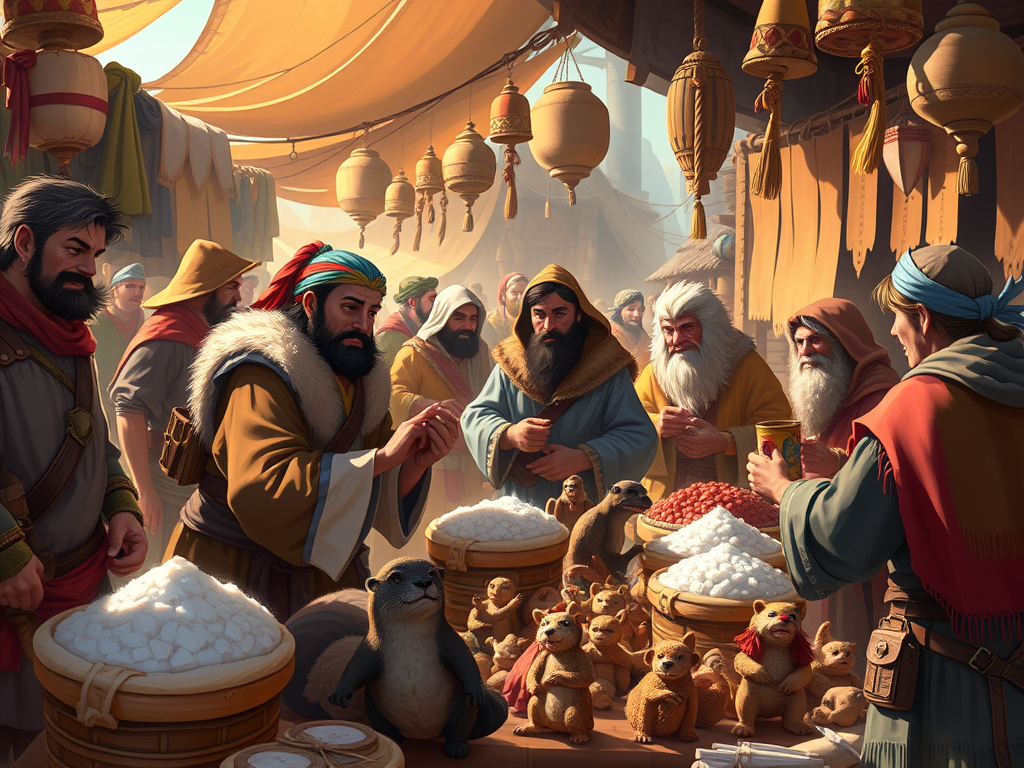
Even though the mechanics are in terms of completely generic trade goods, the intent is to make up flavor details on the fly about what the cargo actually is, like otter pelts, bags of salt, sets of fertility figurines of the goddess Whut, or whatever.

Simple Trading Mini-Game

Core Mechanics

  • Characters use cargo space to transport goods between locations
  • Each cargo space can hold either one large shipment or two small shipments
  • Trading requires finding goods at one location and selling them at another

Location Ratings

Each location has a Wealth Rating from 4-12:

  • Higher ratings mean more money to spend but pickier buyers
  • Even ratings use matching dice (e.g., 2d4 for rating 4)
  • Odd ratings use mixed dice (e.g., 1d4 + 1d6 for rating 5)
  • Take the higher roll of the two dice

Goods and Cargo

  • Goods have a Value Rating from 4-12 using the same dice system
  • Higher-rated goods are easier to sell but harder to acquire
  • Lower-rated goods are easier to find but harder to sell at wealthy locations
  • Small shipments: Roll trading skill at -2 when buying, Value Rating is normal when selling
  • Large shipments: Roll trading skill normally and get +2 to Value Rating when selling

Trading Process

Buying:

  1. Choose what type of goods to look for (set Value Rating) and shipment size
  2. Roll your trading skill (with -2 for small shipments) vs. the good’s Value Rating
  3. If you succeed, goods are available at the price shown by the lower of the two Value Rating dice
  4. If you fail or don’t like the price, must wait 3 actions before trying again

Selling:

  1. Roll the good’s Value Rating (+2 for large shipments) vs. location’s Wealth Rating
  2. If successful, buyers offer the amount shown on the Wealth Rating dice
  3. Profit/loss is the difference between selling and buying price
  4. Must sell at a different location than where you bought
  5. If you fail or don’t like the offer, must wait 3 actions before trying again

The Mistakes of Greyhawk

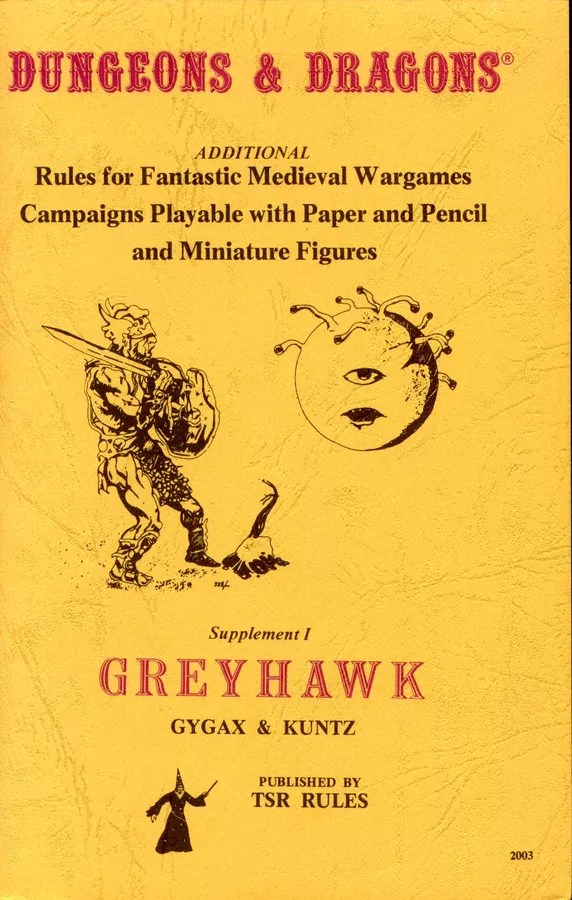
The other day I said offhandedly in the Wandering DM’s discord that I’m halfway inclined to categorize Greyhawk, the first supplement to original Dungeons & Dragons, as a series of mistakes that we’re still paying for. The more I think about it, the more I want to make that case.

Mistake 1: Thieves

The Thief was the first step on the slippery slope of a class for everything, and everything needs a class. Before the Thief, if somebody wanted to perform an action like attempt to pick a pocket or disarm a trap, or even hide in shadows, the Referee would just have to adjudicate it based on assessing the situation and maybe considering things like Dex or armor worn, to taste. After the Thief not only was there a specific mechanic for it, but the Thief’s chances were so low (<50% for almost everything except climbing until about 7th level) that clearly nobody but a Thief should be allowed to attempt it at all. Much ink has been spilled over the years since trying to rationalize or make it workable (e.g. making Thieves skills nigh supernatural, not just hiding but hiding with nothing but a shadow to conceal you). All of that, though, is clearly a band-aid on something that wasn’t originally a wound.

Mistake 2: ATTRIBUTE Inflation

The little brown books (LBB) of original D&D had the Referee (!) rolling up the attributes, called Abilities, for the characters, and then little else there were explicit rules for. The following is pretty much it.

Bonuses and Penalties to Advancement due to Abilities:
(Low score is 3–8; Average is 9–12; High is 13–18)
Prime requisite 15 or more: Add 10% to earned experience
Prime requisite 13 or 14: Add 5% to earned experience
Prime requisite of 9–12: Average, no bonus or penalty
Prime requisite 8 or 7: Minus 10% from earned experience
Prime requisite 6 or less: Minus 20% from earned experience
Constitution 15 or more: Add +1 to each hit die
Constitution 13 or 14: Will withstand adversity
Constitution of 9–12: 60% to 90% chance of survival
Constitution 8 or 7: 40% to 50% chance of survival
Constitution 6 or less: Minus 1 from each hit die*
Dexterity above 12: Fire any missile at +1
Dexterity under 9: Fire any missile at –1

minimum score of 1 on any die

There was guidance in the description of what the abilities mean that hinted ways the Referees might use them, e.g. “Dexterity applies to both manual speed and conjuration. It will indicate the character’s missile ability and speed with actions such as firing first, getting off a spell, etc.” but no formal procedures. There was also some confusing stuff about using your abilities to raise your prime requisite, but it mostly made little difference in play.

So when Greyhawk adds a bunch more explicit rules around abilities, that seems like a welcome change. Finally, this is what the scores in abilities were for! Unfortunately, the way this was done was a mistake and led directly to the current hell of Attribute Inflation where in D&D 5e “Dex-based builds” should be aiming for a 20 in Dex. Where in the LBB, having an 18 Str is no better or worse than a 12 Str unless the Referee deems it important in the situation, starting in Greyhawk a 1st level fighter with 18 STR is better at attacking than a 6th level fighter with 12 STR (same chance to hit, but on average double the damage)… and that’s before the wackiness of the “percentile strength” that gets tacked on once you roll an 18 in STR. The scale is wrong when a lucky roll (or persistence in rolling up new characters) counts for more than months of advancement in play.

If anything Magic-users have it worse with the new intelligence rules. Before Greyhawk a high Int wizard was benefited primarily by leveling up ever-so-slightly faster than an average Int wizard. According to Greyhawk, though, average Int wizards have only a 50-50 shot at knowing any given spell, have a strict maximum on how many spells of a given level they can ever know, and are cut off from learning the highest level spells completely. The exact details don’t matter, though, as much as the fact that now for the first time there’s really an optimal “build” for a character class, and it really matters. You can see this play out in subsequent editions, starting with AD&D where they abandon 3d6 in order in favor of various methods of skewing the numbers towards higher averages (e.g. 4d6 drop lowest, roll 3d6 12 times and take the best 6, etc.) until in 5e you get here, here are your numbers, arrange them.

Mistake 3: Hit Point Inflation

Greyhawk introduced the variable-sized hit die by class “expressly aimed at raising fighters and lowering magic-users with regard to hit points which can be sustained.” Fighters would now get d8, while Magic-users were lowered to d4 (and Thieves came in at d4). Moreover if you used this system all monsters would get d8 hit dice. Since not all weapons were adjusted, the effect was either to draw out combats or funnel everybody into using the weapons that kept parity with the monsters. I’m not sure what problem this was solving (was there anybody who thought too many MUs were surviving to 2nd level?), I think the trend towards both monsters and PCs (except wizards) being ever larger bags of HP was clearly set in motion.

Mistake 4: XP Deflation

Maybe not one of Greyhawk’s biggest sins, but since we’re going through the pages in order… Declaring the original 100 XP per HD ridiculous, Greyhawk adds a lookup table of XP awards that slash them to about a 1/5 to 1/3. Again I’m not sure what problem this solves, although maybe if you’re running games every day of the week anything to slow leveling down is a plus. In theory this tilts the playing field farther towards getting most of your XP from gold, but I believe in practice it just led to more calls for getting XP for other things, or per session and eventually to the current fad of ditching XP completely and leveling up when the GM or module feels it’s appropriate.

MISTAKE 5: THE SINGLE BEST WEAPON

Greyhawk added a number of things that changed how weapons worked in the “Alternative Combat System” (the d20 system that everybody, including Gary, uses). First is variable damage dice per weapon, which I admit I kind of like, but as implemented means that really the only weapons that stay on par with Monster HP are the ones that fighters use. The weapons that do more damage than a 1 handed sword are all flagged as requiring so much space on either side of the wielder that they require the wielder to stand alone in the front line. How Gary reconciled his love of historical polearms with the new requirement that polearm users can never actually form ranks, requiring a minimum of 6′ on either side, I don’t really know. My suspicion is that he only intermittently enforced that rule, if at all. The next widely ignored bit was to-hit bonuses per weapon by AC and different weapon damage against larger-than-man-sized creatures. The interaction between the tables is messy, but the net effect is once again sword is the all-purpose weapon (military pick being better to-hit against the heaviest armor but losing in damage, particularly when it comes to large creatures).

Before Greyhawk all characters would use whatever weapon they liked best (or was most magical) within class restrictions. After Greyhawk, regardless of the specifics, most of which weren’t carried over past AD&D, there was seldom any better weapon than a sword so everybody who can uses that. Heck, one of the most common restriction to relax on Clerics is the one forbidding them from using swords. There have been various attempts, particularly in house rules, to introduce some easier to work with reasons for favoring this or that alternative weapons, such as differentiating between piercing, crushing and slicing damage and making those interact with various monster damage resistances or armor types but frankly they’re all kind of messy. Given the abstract nature of D&D’s combat and Hit Point system the addition of various distinctions between weapons and how they interact with what kind of target seems like yet another mistake. It’s a lot of work to add very little to the decision making process of combat.

Mistake 6: Armor Class Inflation

Or perhaps that’s Deflation, given the descending armor class. For the first time Greyhawk contemplates how magic armor and shields can stack to give you AC even better than plate armor and shield, introducing the dread negative AC, all the way out to AC -8! No, just no. Even when ascending AC became a thing, there were still ACs that went up to 30. 5e eventually tried to rein this in with the concept of “bounded accuracy” but it’s not actually clear they succeeded.

Mistake 7: Monster Attack Inflation

Greyhawk greatly complicated the monsters attacks with a chart of how many attacks and what damage each monster rolled (unfortunately expressed as a range like 2-8 instead of a set of dice to roll, requiring the Ref to back into the roll), most of them becoming very much more dangerous. In the LBB only a handful of the most dangerous monsters like Giants or Hydras ever had more than one attack or did more than 1d6 damage, now more than half the creatures do multiple attacks, more than 1d8 damage, or both. This was the beginning of needing a monster stat block to express what a monster can do, and the beginning of the headaches for the Referee to keep track of all that and use it, culminating in things like The Monsters Know What They’re Doing. Keith Ammann seems like a great guy, and he writes entertainingly, but something has gone off the rails if this kind of thing is really a helpful resource.

MISTAKE 8: Spell Inflation

Greyhawk introduced several of D&D’s most iconic spells like Magic Missile, Web, Magic Mouth, and Explosive Runes. It also introduced entirely new, and imo unnecessary, spell levels: a whole three new levels of MU spells including such game breakers as Reverse Gravity, Mass Charm, Time Stop, and Wish. Clerics get another two whole levels, because Raise the Dead just isn’t miraculous enough. Several of these seem to just exist to excuse Refs putting such effects in the dungeons. Others are, OK, but do you really have 18th level MUs who are going to cast them? What’s going on with your campaign?

On the whole these are relatively harmless, except maybe really blowing out the end-game expectations of what PCs are capable of… and to extent you accept those as goals really putting the emphasis on choosing races and playing characters with scores that can reach those lofty levels. Maybe it upped the temptation to go full Monty Hall just so your players could get there, but the drive to level up was always pretty much the core motivation of the game.

Mistake 9: Infra-Vision

Update: I can’t believe I missed this first time around, but I was just discussing how I removed infra-vision from demi-humans in my games, and I looked it up and found that infra-vision was another thing added in Greyhawk. In the LBB only monsters have infra-vision, and they actually lose it if they become part of a PC party! Not having infra-vision, even for monstrous humanoids like goblins and orcs makes it closer to the way things worked in the Hobbit, reduces the perceived need to have all demi-human parties so as not to worry about light sources, and to makes stealth a more viable option in the dungeon. If the goblin and orcs in the dungeon need light sources it’s no longer the case that the party using a light source will instantly alert all the monsters.

The Rest of the Book

Most of the rest is new treasure, new monsters including several of the most iconic D&D monsters such as Gelatinous Cubes, Umber Hulks, Rust Monsters and Stirges, new traps and some errata. Except maybe the monsters that are really more of a trap and the wild proliferation of cursed items there’s nothing much that stands out as clearly a mistake or a step along a perilous path.

The Prosecution Sums Up

Over all, the biggest effect of Greyhawk taken in toto is to greatly enhance the importance of ability scores, buff fighters, and nerf everyone else, particularly Magic Users. Making MU’s twice as fragile while half as effective at fighting really contributed to the both their perception as not being fun to play (unless you could start at higher levels) and the whole 15-minute workday phenomenon that even 5e is still struggling to counteract. In retrospect I see Greyhawk as being in some ways a product of the so-called “death spiral of improvements” that besets many fields of endeavor as new works cater more and more to jaded experts, lessening if not ruining much of their initial charm and approachability for novices. When you’re running a campaign for many players, nearly every day of the week, lots of new high-end toys for them to play with and more procedures that offer minor variation even if somewhat more baroque and cumbersome can seem especially attractive, while making things increasingly frustrating and difficult for low-level characters or reducing the variety of viable characters seems like a minor price to pay. At this point in an established campaign, you might hardly have anybody playing 1st through 3rd level characters as even when characters die you’re letting them start at a higher level or inherit the funds and equipment of the original character or they’re catching up in a few session from their split of loot in higher level adventures.

So what would I actually use from Greyhawk? Honestly I’m not sure. If I were to run a specifically OD&D game, and not some kind of B/X hybrid, I probably would pull in most of the new spells but not the new spell levels, all of the monsters and treasure. Beyond that I’m really not sure any of it is worth it. There’s a strong temptation to do something explicit for high or low ability scores and to provide some incentives to use different weapons, but I think I would really try to rely more on just applying more Referee’s discretion to work things out.

Break! Kickstarter is live!

Apparently it’s been in the works for 10 years now. Funny, it feels like only seven.

BREAK!

I’ve lost touch with Reynaldo since the great G+ diaspora, so I wasn’t really sure if this was still going to be a thing. I’m pretty pleased that it is, though I have no idea if I’m going to find anybody to play it with. I’m not sure anyone in my home group is that into the anime and JRPG influences that are its inspiration. Maybe if I pitched it as Studio Ghibli meets D&D…